Blink Tags and Bad Backgrounds: A Love Letter to the Internet's Most Gloriously Hideous Websites
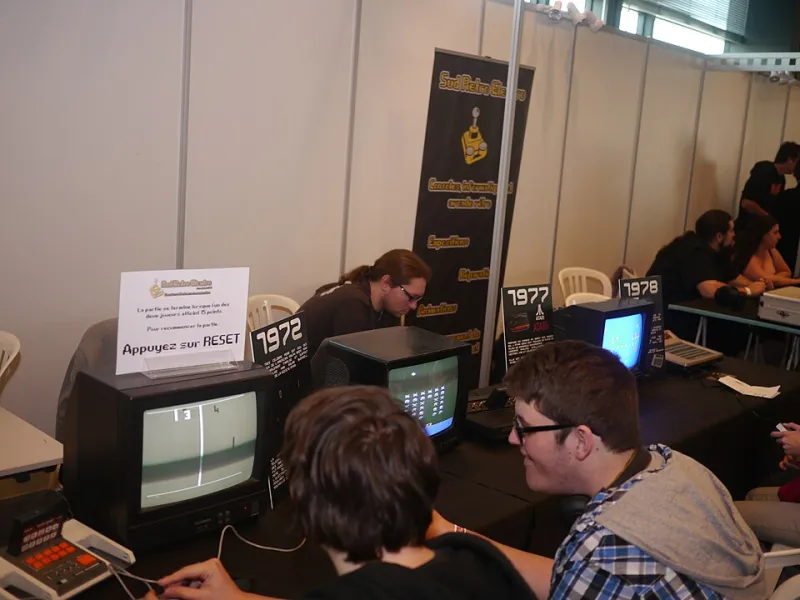
Photo: Yves Tennevin, CC BY-SA 3.0, via Wikimedia Commons
Somewhere right now, frozen in amber at web.archive.org, there is a website with a black background, yellow Comic Sans text, a spinning 3D globe GIF in the upper left corner, and an auto-playing MIDI rendition of "My Heart Will Go On." It was made in 1998 by a thirteen-year-old in Ohio who really, really liked Titanic. It is, objectively speaking, an assault on the human eye. It is also one of the most charming things you will ever see on the internet.
The Wayback Machine — that sprawling digital archive run by the nonprofit Internet Archive — has been quietly preserving the web since 1996. Its stated mission is serious stuff: protecting cultural heritage, maintaining access to disappearing information, keeping the historical record intact. What nobody fully planned for is that it would also become the world's largest museum of absolutely unhinged web design.
What Were We Even Thinking
To understand the aesthetic chaos of early internet design, you have to understand the context. In the mid-to-late nineties, most people building personal websites had exactly zero training in design, zero access to professional tools, and zero reason to care what anyone else thought about their choices. They were building pages for themselves — shrines to their favorite TV shows, their pets, their collections of dragon figurines, their strong opinions about which Backstreet Boy was the most underrated.
GeoCities, the platform that hosted millions of these personal pages before Yahoo bought it and eventually killed it in 2009, organized user sites into "neighborhoods" based on topic. Silicon Valley was for tech stuff. Nashville was for country music. Area 51 was for sci-fi and paranormal content. Within these neighborhoods, people built the digital equivalent of yard decorations — more is more, and restraint was not a concept that had been introduced yet.
The Wayback Machine caught most of it before GeoCities went dark. You can still visit archived pages today and experience the full sensory assault: tiled backgrounds of tiny flames or marble textures, visitor counters proudly displaying numbers like "YOU ARE VISITOR 00000847," guestbooks where strangers left messages like "kewl site!!! add me 2 ur links!!!", and navigation bars made of animated buttons that wobbled or glowed when you hovered over them.
The MIDI Industrial Complex
Perhaps nothing defines the era more completely than the auto-playing MIDI file. If you weren't there, imagine clicking a link and being immediately ambushed by a tinny, synthetic version of "Enya - Only Time" blasting from your computer speakers while you frantically searched for a stop button that the website creator had deliberately hidden or simply not included.
Website owners loved this. It felt like giving your site a personality, a mood, a soundtrack. Fan pages for The X-Files played spooky synth loops. Dragon ball Z fan sites played the opening theme, badly. Someone's page dedicated to their cat named Whiskers played a MIDI version of "What's New Pussycat" on infinite loop.
There was no concept of consent in early web audio. You clicked, you heard things. That was the deal.
Why These Monstrosities Are Actually Kind of Beautiful
Here's the thing about spending an afternoon in the Wayback Machine's ugliest corners: you start to feel something unexpected. Not pity, not superiority. Something closer to warmth.
These sites were made by real people who were genuinely excited about something. The teenager who built a twelve-page deep dive on every episode of Buffy the Vampire Slayer, complete with hand-coded HTML tables and a blinking "SPOILERS AHEAD" warning, cared. The person who maintained a recipe site with a tiled gingham background and clip art of steaming pies actually wanted to share something with the world.
Compare that to the internet we have now, where every website looks more or less the same — clean sans-serif fonts, white space, a hero image, a hamburger menu on mobile. Aesthetics have been thoroughly algorithmically optimized. Everything converts. Everything performs. Nothing surprises you.
Early internet design was anarchic precisely because it had no optimization layer. Nobody was A/B testing the animated flame border. Nobody was tracking bounce rates on the guestbook page. The design reflected the person, not the platform's preferences.
The Specific Horrors Worth Seeking Out
If you want to go exploring yourself — and honestly, you should — there are a few categories of archived sites that reliably deliver.
Fan pages for nineties TV shows are a gold mine. Search for archived Geocities pages related to shows like Dawson's Creek, Roswell, or Charmed and prepare for pages that load image by image, top to bottom, like a curtain slowly being pulled back on a disaster.
Personal homepages are perhaps the purest form. Look for pages with titles like "Welcome to [Name]'s Little Corner of the Web!!!" These often include a photo (blurry, low-res, probably taken with a webcam), a list of the owner's favorite things, a links page that goes nowhere because all the linked sites are also gone, and a construction GIF indicating that the site is "under construction" — a state it has apparently remained in since 2001.
Early business websites have their own distinct flavor of horror. Local restaurants, small law firms, regional car dealerships — these organizations paid someone actual money to build them a site with a Flash intro, WordArt-style logos, and contact information that hasn't been updated since the Clinton administration.
The Archive Is the Point
What the Wayback Machine is really preserving isn't bad taste. It's creative freedom in its most unfiltered form — a record of what people chose to make when nobody had told them yet what the internet was supposed to look like.
The web got better-looking. It also got a lot more controlled. The platforms we use now hand us templates, enforce guidelines, and gently nudge us toward approved formats. Nobody's putting a spinning skull GIF on their Instagram profile. Nobody's making their TikTok auto-play a MIDI file.
But somewhere in those archived pages, a kid's passion project about their favorite band still exists, exactly as they left it, blink tags and all. That's not ugly. That's kind of everything.