Gravestones with Guestbooks: The People Fighting to Save the Internet's Dead and Forgotten
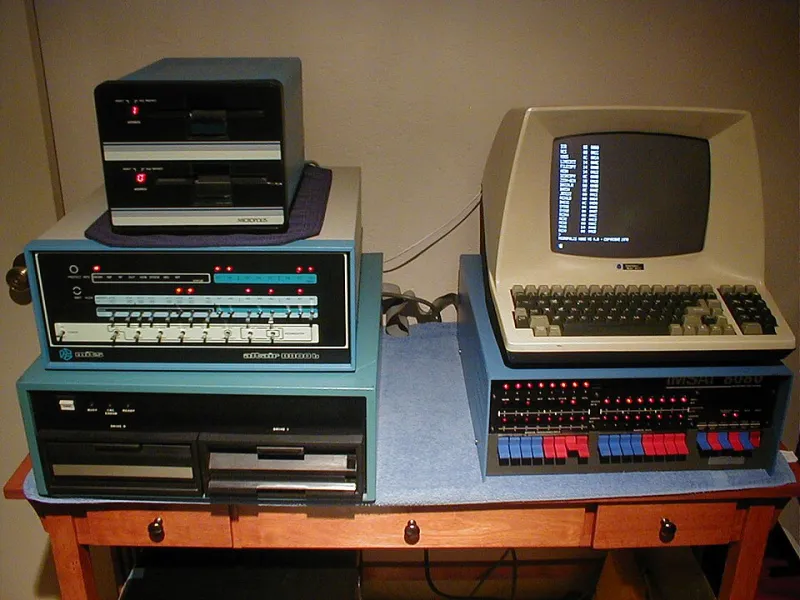
Photo: John crane 59, CC BY-SA 3.0, via Wikimedia Commons
Somewhere in the Wayback Machine, a GeoCities fan page for a mid-tier 1990s sitcom is perfectly preserved — guestbook entries and all. The person who built it probably hasn't thought about it in twenty years. But a small, passionate community of digital archivists thinks it's worth saving anyway, and they've got a pretty compelling argument for why.
The early internet is dying. Not dramatically, not all at once, but in a slow, quiet erosion — link rot eating through old URLs, servers shutting down, domain registrations lapsing, and entire communities simply ceasing to exist without fanfare or obituary. And unlike a physical building that leaves rubble behind, a dead website leaves nothing. One day it's there. The next, it's a 404.
What We're Actually Losing
It's easy to be dismissive about this. Who cares if a defunct forum for fans of a discontinued candy bar disappears? Or a message board where teenagers in 2003 argued about which Linkin Park album was better?
The archivists would tell you: historians care. Sociologists care. And honestly, anyone who wants to understand how American culture evolved online over the past thirty years should probably care too.
Abandoned websites are primary sources. They capture how real people — not media professionals, not academics — actually talked, thought, and connected during specific moments in time. The spelling errors, the inside jokes, the flaming arguments in all caps, the heartfelt posts about personal struggles buried in threads nobody ever replied to. That's texture you can't reconstruct from a think piece written ten years later.
Forum communities, in particular, were often the first place people found their people. The niche corners of the early web were where someone with an obscure interest could finally stop feeling like the only one. Gay teenagers in rural towns. Fans of an underground band. People dealing with rare medical conditions. These spaces mattered deeply to the people in them, and most of them are gone.
The Wayback Machine and Its Limits
The Internet Archive's Wayback Machine is the obvious first stop for anyone doing digital archaeology. Founded in 1996, it has crawled and stored billions of web pages, making it an invaluable resource for recovering lost content. Type in an old URL and there's a decent chance you'll find at least a partial snapshot of what used to live there.
But the Wayback Machine has real gaps. Dynamic content — the kind that required a login, or was generated by a database on the fly — often wasn't captured. Forum posts behind registration walls, private community spaces, interactive features: these frequently didn't make it into the archive. You might find the shell of an old message board but none of the actual conversations that gave it life.
That's why individual archivists and volunteer groups have stepped in to do more targeted preservation work. Projects like Archive Team — a loose collective of programmers and enthusiasts — have mounted emergency crawls to capture sites before they shut down permanently. When Yahoo announced it was deleting all old Yahoo Groups content in 2019, Archive Team scrambled to pull as much as they could before the deadline. They saved a significant chunk. But not everything.
The Obsession With Digital Resurrection
Beyond passive preservation, there's a more active — and arguably more intense — corner of this community: the people who want to bring dead websites back to life.
Think about the effort that went into resurrecting old MMOs. City of Heroes, an online superhero game shut down by its publisher in 2012, was secretly kept alive by a rogue server for years before eventually going fully public in 2019. The people who ran it weren't doing it for money. They were doing it because something they loved had been taken away, and they had the technical skills to get it back.
Similar energy drives the GeoCities preservation projects. When Yahoo shut down GeoCities in 2009, volunteers worked frantically to archive as much of it as possible. Today, sites like OoCities and the GeoCities Gallery let you browse through thousands of those old pages — the tiled backgrounds, the under-construction GIFs, the MIDI files that autoplay whether you want them to or not.
There's something almost tender about it. These weren't polished websites. They were digital bedrooms — messy, personal, embarrassing in the best way. Preserving them feels less like archiving and more like keeping someone's scrapbook from being thrown away.
What These Digital Time Capsules Actually Tell Us
Spend enough time in the Wayback Machine and patterns start to emerge. Early internet culture was simultaneously more chaotic and more earnest than what we have now. People were figuring out the norms as they went, and that experimentation is visible in every weird design choice and oversharing forum post.
You can also watch cultural moments ripple through the web in real time. Pull up a news site from September 12, 2001, or a fan forum from the day a beloved show got canceled, and you're reading unfiltered, immediate human reaction — not the cleaned-up retrospective version. That's genuinely irreplaceable.
Deaiz has spent some time down these rabbit holes, and the thing that keeps striking us is how present it all feels. These aren't dusty museum artifacts. They're conversations. People arguing about stuff, recommending things to each other, making each other laugh. The technology is dated but the humanity isn't.
Why It Matters More Than You Think
The internet has this reputation for permanence — "the internet never forgets" — but the reality is almost the opposite. The web is fragile. Studies have estimated that a significant percentage of links published in major newspapers are already dead. Academic citations point to URLs that no longer exist. The average lifespan of a web page is somewhere around a hundred days before it changes or disappears.
We're in a strange situation where the most documented era in human history is also one of the most at risk of being lost. We have more records of daily life from the early 2000s than from any previous period — and we're losing them constantly.
The archivists working to prevent that aren't doing it for glory. There's not a lot of recognition in crawling through dead URLs and broken image links. They're doing it because they believe these forgotten corners of the internet are worth remembering — not despite their obscurity, but because of it.
The mainstream gets preserved. It's the weird, niche, deeply human stuff that needs help.
And honestly, that feels very on-brand for the internet at its best.