The Other Account: How Everyone You Know Is Living a Double Online Life
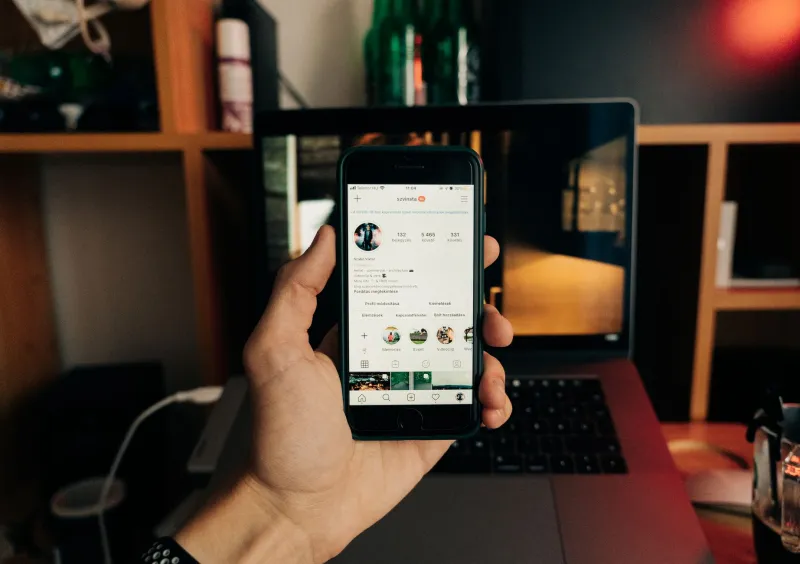
Here's a scenario. You're at a work happy hour, and someone mentions that they "have an Instagram but barely use it." You look them up later. Forty-three posts, all tasteful, mostly food and one hiking trip. Fewer than 200 followers. Everything locked down. You think: okay, they really don't use it much.
What you don't know — what you will never know — is that this person has a second account. Different username. Private. Roughly 80 followers, all carefully selected. That's where they post the unfiltered stuff: the rant about the commute, the blurry photo from the concert, the screenshot of the text message exchange they can't believe actually happened. That account is their real online presence. The one you found is basically a decoy.
Welcome to the era of the parallel online self.
The Finsta Grew Up and Got a Job
The term "finsta" — fake Instagram — used to be purely a teenager thing. You had your real account, which your parents and teachers could theoretically find, and your finsta, which was for your actual friends and contained content that would definitely get you in trouble. The whole point was obscurity. Bad username, no profile picture, no connection to your real identity.
But something shifted. The concept quietly expanded beyond high school hallways and now describes a much broader phenomenon: the intentionally unfindable secondary account that people of all ages maintain alongside their public-facing one.
College students have them. People in their 30s have them. There's a whole generation of professionals who maintain a buttoned-up LinkedIn presence, a semi-curated personal Instagram, and then something else entirely — a private Twitter account, a locked Tumblr, a Discord persona that their real-life friends don't know about — where they actually say what they think.
The finsta grew up, got a job, and learned to be even harder to find.
Why People Build These Ghost Accounts
The motivations are all over the place, which is part of what makes this phenomenon interesting.
Some of it is straightforward privacy management. Social media started out feeling like a place to share things with friends, and somewhere along the way it became a professional liability, a family obligation, and an algorithmic performance. The appeal of a space where your boss can't see you, your aunt can't comment, and your follower count doesn't matter is completely understandable.
Some of it is community-specific. There are interest-based corners of the internet — fan communities, niche hobby groups, specific political or social spaces — that people participate in under completely separate identities because they don't want those interests attached to their searchable real name. Someone might be a well-known professional by day and a deeply active member of a very specific fandom by night, and those two identities genuinely don't need to meet.
Some of it is emotional. Therapists have noted an uptick in clients who describe maintaining a private account as a mental health tool — a place to process things without audience, without likes, without the performance pressure that public posting creates. One person described their locked Twitter as "cheaper than journaling apps and more satisfying than talking to the wall."
And yes, some of it is less wholesome. Relationship drama, venting about specific people, posting things someone would regret if their main audience saw them. The internet has always been a place where people say things they wouldn't say out loud, and the secondary account is just the current delivery mechanism for that impulse.
The Architecture of Staying Hidden
Keeping a secondary account actually unfindable requires more effort than you'd think, which is kind of fascinating in itself.
The basics: different username (obviously), different profile photo or no photo at all, different email address used to register. Some people go further — different phone number via a Google Voice account, VPN usage to prevent IP-based cross-referencing, careful management of who gets to follow and when.
Platforms have gotten increasingly good at suggesting "people you may know" based on contact lists, shared followers, and device fingerprinting. Which means that if you follow even one person from your real life on your secret account, the algorithm starts trying to introduce you to everyone else you know. Keeping these identities fully separate requires active maintenance.
There's a whole informal knowledge base around this. Forum threads, Reddit posts, TikTok explainers — all dedicated to the art of maintaining an online presence that people who know you in real life simply cannot stumble across. It's become its own kind of digital literacy.
The Weird Social Contract of the Finsta
Here's where it gets philosophically interesting. These accounts are secret from most people, but they're not actually private in any meaningful sense. They have audiences. Sometimes substantial ones. The content is shared, commented on, engaged with. The only thing that's actually hidden is the connection to the person's real identity.
This creates a strange social contract. The people who follow a finsta are essentially trusted with a more authentic version of someone than the general public gets. Being added to someone's private account is genuinely a form of intimacy now — a signal that you're in the inner circle, that you're trusted with the unfiltered version.
And getting removed? That's a whole thing. People have had genuine friendship fallouts over finsta access. Being quietly unfollowed from someone's private account — discovering it because their post count no longer matches what you can see — carries a specific social sting that's hard to explain to anyone who doesn't already get it.
The Public Account Is the Mask Now
Maybe the most interesting inversion here is what it says about our relationship with our public online presence. For a long time, the assumption was that social media was where you showed your real self — your actual interests, your genuine personality — while your offline professional life was the performance.
That's basically flipped. The public account, for a lot of people, is now the careful construction. It's the highlight reel, the brand, the thing you'd be comfortable showing a potential employer or a first date. The private account — the finsta, the burner, the locked alt — is where the actual self lives.
Which raises a question that's slightly uncomfortable to sit with: if the version of you that exists on the internet that people can actually find isn't really you, what exactly is your online identity?
Maybe that's exactly the point. Maybe having a self that the algorithm can't fully map is the last form of privacy we've got.