The Servers You're Not Supposed to Know About: Inside Discord's Underground Knowledge Economy
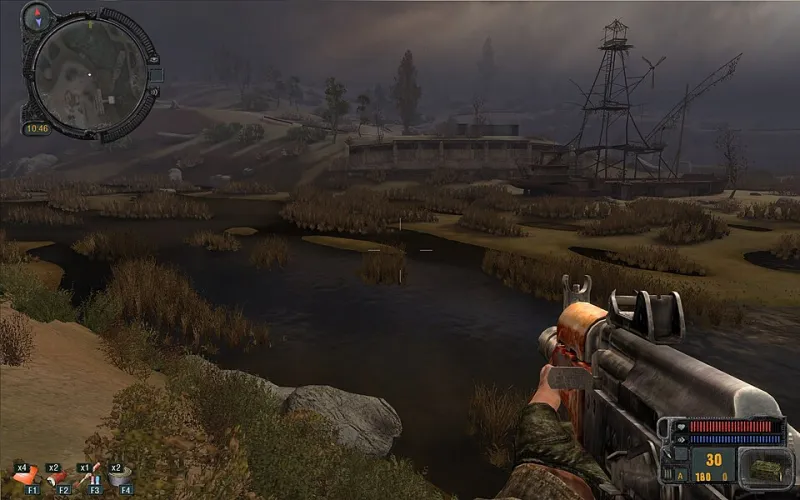
Photo: GSC Game World, GFDL, via Wikimedia Commons
There is a Discord server — you will not find it by searching, and nobody will send you the invite link unless they already know you belong there — where a small community of obsessives has collectively memorized the prop catalogs of every major Hollywood studio from 1975 to 1995. Ask them about the specific coffee mug used in a particular scene from a 1987 thriller. They will tell you the manufacturer, the production run, where it was sourced, and whether any survive in private collections.
This is not unusual. This is Tuesday on Discord.
Google Has Limits. Discord Doesn't Care.
We tend to think of the internet as something that search engines can mostly map. Type a question into Google, get an answer. But there's an enormous amount of human knowledge that exists entirely outside of indexable web pages — knowledge that lives in conversations, in community memory, in the accumulated expertise of people who have spent years going very, very deep on one specific thing.
Discord, the messaging platform that started as a tool for coordinating video game sessions and now hosts something like 500 million registered accounts, has become one of the primary homes for this kind of knowledge. The platform's server structure — invite-only communities organized around topics, with tiered access, searchable message history, and the ability to organize channels by subject — turns out to be a nearly perfect container for niche expertise.
The knowledge inside these servers isn't forbidden in any dramatic sense. It's just specific to the point where no one has ever bothered to write it up anywhere findable. And that specificity is exactly the point.
The Taxonomy of Discord's Hidden Libraries
The servers worth knowing about tend to cluster into a few recognizable types.
Preservation communities are some of the most active. These are groups dedicated to keeping dead or dying things alive — defunct video game engines, abandoned software, obsolete file formats, out-of-print games that never got digital releases. The members of these servers often possess skills that are genuinely rare: the ability to read and write scripting languages that haven't been officially supported in fifteen years, or the know-how to extract audio files from a game format that predates MP3.
If you've ever tried to find documentation for an obscure piece of gaming hardware from the early 2000s and come up empty, there is a reasonable chance that the only people who still have that knowledge are sitting in a Discord server somewhere, helping each other out for free.
Collector verification networks operate somewhat like informal authentication services. Vintage sneaker collectors, antique toy hunters, rare book enthusiasts, militaria collectors — these communities have developed internal expertise that rivals (and sometimes exceeds) what you'd find at an auction house. They've seen enough fakes to know exactly what the stitching on a genuine 1985 Air Jordan looks like. They can date a cast iron skillet by the shape of its pour spout. They know things.
The catch is access. You typically have to prove yourself before anyone shares the good stuff. Joining a serious collector server and immediately asking for authentication help is a reliable way to get ignored. Spending a few weeks demonstrating that you actually know something about the hobby first is how you eventually get a real answer.
Skill-trade communities function almost like informal apprenticeships. These are servers where people exchange tutorials, walkthroughs, and hands-on guidance for skills that don't have great formal learning resources — niche digital art techniques, specific audio engineering workflows, obscure coding approaches. The knowledge isn't secret, exactly. It's just not written down anywhere accessible, so the only way to learn it is from someone who already knows.
Why People Give This Away for Free
The obvious question: why would someone with genuinely rare expertise hand it out to strangers in a Discord server? What's the incentive?
The answer, when you actually spend time in these communities, is almost always the same thing: they want to talk to someone who cares as much as they do.
Being extremely knowledgeable about something obscure is, in most social contexts, a liability. Nobody at a family dinner wants to hear a twenty-minute breakdown of why a particular sound chip in a 1993 console was technically superior to its competitor's approach. Nobody at a work happy hour is going to engage seriously with your theory about which prop house supplied the furniture for a specific 1970s game show set.
But in the right Discord server, that's the entire conversation. The expertise isn't a burden there — it's the price of admission and the community's entire reason for existing.
The Trust Economy
What makes these servers function is a reputation system that isn't formal but is very real. People remember who gave them good information. They remember who showed up with questions but never contributed anything. Over time, the most trusted members accumulate a kind of social capital that translates into access — to the private channels, to the direct messages, to the really good stuff that never gets posted publicly even within the server.
It's not so different from how expertise has always been transmitted in tight-knit communities — through relationships, through demonstrated commitment, through the slow accumulation of trust. Discord just gives that dynamic a digital address.
There's a server for people who restore vintage synthesizers. A server where former theme park employees have collectively documented the technical details of rides that no longer exist. A server full of people who have, between them, reverse-engineered the AI behavior of enemies in a game that came out in 2003 and never got a sequel.
Finding the Door
The irony of writing about invite-only communities in a public article is not lost on anyone. You can't Google your way into these places, and that's the whole point. The usual path is sideways: find a public-facing community adjacent to the niche you're interested in, participate genuinely, and eventually someone mentions a server. Or you follow a creator on YouTube or Twitch who mentions their community server. Or you find a Reddit thread where someone drops an invite link that may or may not still be active.
The barrier isn't technical. It's social. Which, when you think about it, is how the best knowledge has always been shared — not through algorithms, but through people deciding you're worth talking to.
The internet keeps telling us that information wants to be free and findable and SEO-optimized. Discord's underground library quietly disagrees. Some knowledge is worth a little more effort to find.